
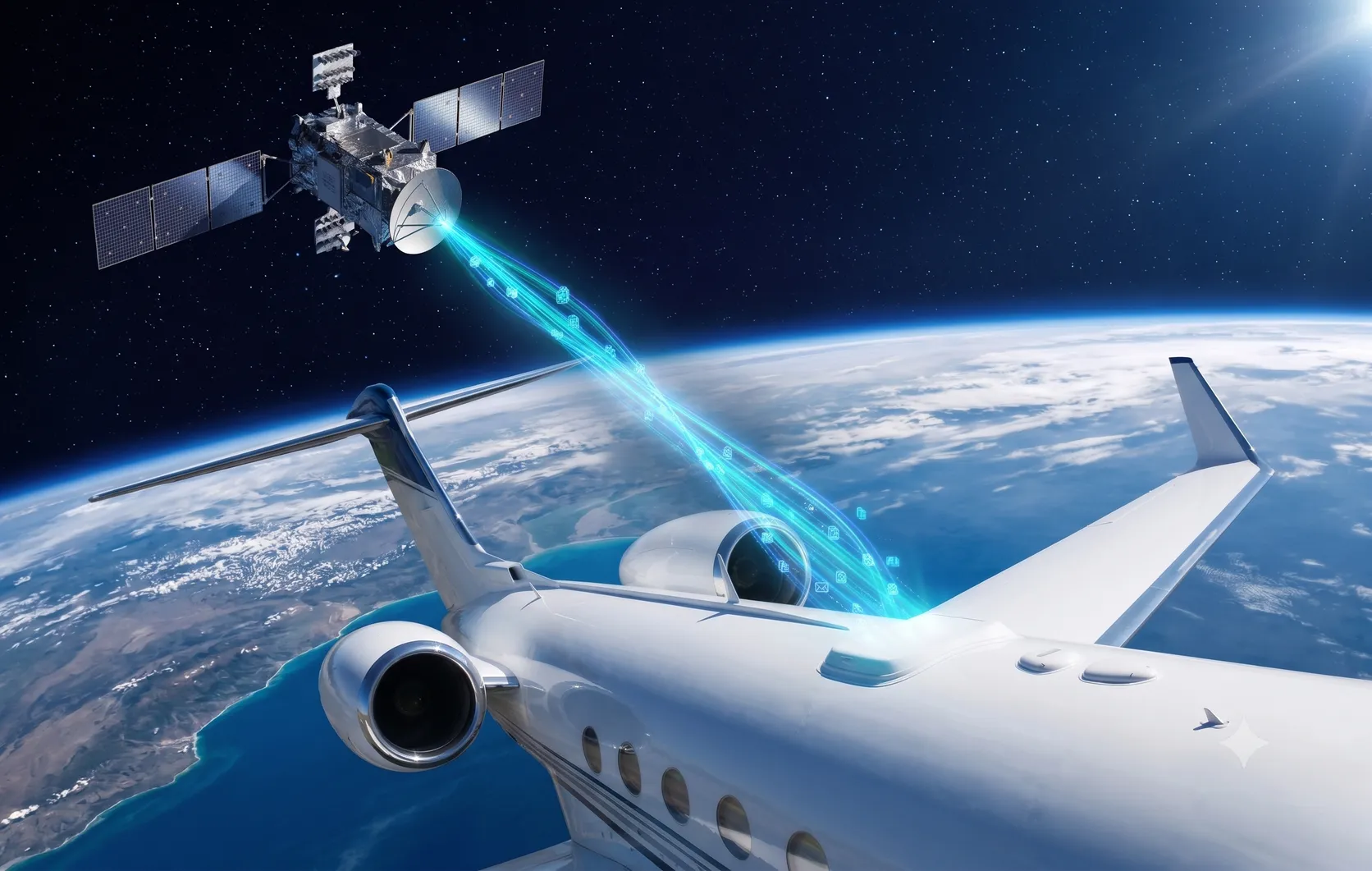
Amazon spent six years building a satellite constellation almost nobody in aviation took seriously. In 2026 that changed. Amazon Leo is in enterprise beta, its constellation has passed 390 satellites, and it has shown an aviation antenna rated at 1 Gbps down.
The name is new. Project Kuiper was rebranded to Amazon Leo in November 2025, which tells you something about how the company sees the product now. Kuiper was a research program name. Leo is a utility brand, and utilities are meant to be sold.
Where the constellation actually stands
The first production satellites went up on an Atlas V in April 2025. Deployment accelerated through 2026, with April becoming the highest cadence month yet: three launches in 26 days putting 90 satellites into orbit. Amazon has publicly said it now has enough satellites deployed to begin service at initial latitudes later this year.
It is not all smooth. Amazon's FCC authorization requires 1,618 satellites in orbit by July 30, 2026, and the company is well short of that. It has applied for a two year extension and contracted an additional 22 launches to close the gap. Regulators have granted this kind of relief before when a constellation is visibly progressing, but it is a real open item rather than a formality.
The aviation piece
Amazon Leo has introduced an aviation antenna quoting up to 1 Gbps download and 400 Mbps upload. JetBlue is among the named beta customers for inflight connectivity. That is a commercial airline play first, which is the same order of operations Starlink followed before business aviation installations became routine.
Business aviation rarely gets a new satellite network first. It gets it second, after the airlines have absorbed the early problems, and usually at better terms.
For business aircraft specifically, three things have to happen before Amazon Leo is a real option: a terminal small and light enough for a midsize fuselage, supplemental type certificates for specific airframes, and a service plan structure that makes sense for aircraft flying 300 hours a year rather than 3,000. None of those are solved yet. All of them are solvable.
Why this matters even if you never buy it
The most useful thing Amazon Leo can do for a jet owner in 2026 is exist.
Starlink has been the only credible high-throughput low-earth-orbit option in business aviation for three years, and it has priced accordingly. Its July 2026 restructure, which doubled several monthly plans and pushed hardware toward $200,000, is exactly what a market with one serious supplier looks like. A second constellation with Amazon's balance sheet behind it, plus Gogo Galileo already flying on more than 120 aircraft, changes the negotiating position of every operator in the industry.
Amazon also brings something SpaceX does not: an existing enterprise relationship with most of the Fortune 500 through AWS. If Leo connectivity lands as a line on a corporate cloud agreement rather than a standalone aviation subscription, the buying conversation for flight departments looks very different.
What we tell customers today
Do not wait. An aircraft grounded from a connectivity standpoint for two more years while you watch a constellation fill out is an aircraft losing charter bookings and resale position right now. The terminals being installed today have real service lives, and the aircraft will very likely be retrofitted again at some point regardless. That has always been true of avionics.
What is worth doing is asking your installer how the system is wired, mounted, and documented. A clean, well engineered installation with proper approved data is the part that carries forward. The box on top of it is the part that changes.
Last reviewed and updated on by the SatCon team.